
Neon vs AWS RDS: Which PostgreSQL Service Should You Use?
 Jay
JayNeon vs AWS RDS is a choice between serverless PostgreSQL built for variable workloads and a mature managed PostgreSQL service built around provisioned infrastructure.
Choose Neon for scale to zero, autoscaling, instant database branches, and a strong preview-environment workflow. Choose Amazon RDS for PostgreSQL for predictable resources, established AWS networking and operations, wider infrastructure controls, and conventional high-availability deployments.
| Area | Neon | Amazon RDS for PostgreSQL |
|---|---|---|
| Database engine | PostgreSQL with separated compute and storage | Standard PostgreSQL on managed instances |
| Scaling | Autoscaling within configured limits | Change instance size, storage autoscaling, and read replicas |
| Idle databases | Compute can scale to zero | Instance continues running |
| Branching | Copy-on-write database branches | No native development branches |
| High availability | Managed service architecture and plan features | Multi-AZ deployment options |
| Networking | Public connectivity and platform controls | VPC, security groups, private subnets, and AWS integrations |
| Best fit | SaaS, previews, development, and variable traffic | Production systems standardised on AWS |
The main architectural difference
Neon separates compute and storage. A compute endpoint runs PostgreSQL query processing, while the storage system keeps the durable database state. Compute can suspend when unused and start again when a connection arrives.
Amazon RDS for PostgreSQL manages a conventional PostgreSQL instance. AWS handles infrastructure tasks such as backups, maintenance, monitoring integrations, and replacement of failed infrastructure. Teams still select an instance class, storage configuration, network placement, and availability design.
Neon's design treats compute as disposable. RDS treats the database instance as a long-running managed resource. That one distinction explains most differences in scaling, pricing, development environments, and operations.
PostgreSQL compatibility and extensions
Both services run PostgreSQL rather than a new SQL engine. Standard drivers, common ORMs, pg_dump, SQL clients, and PostgreSQL query behaviour work as expected in the normal case.
Provider limits still matter. Neon and RDS support selected PostgreSQL versions and extension sets. RDS also adds AWS-specific extensions and administrative roles while restricting operating-system and superuser access. Neon controls features that depend on its storage and compute architecture.
Create an inventory before migrating:
- PostgreSQL version and collation
- Installed extensions
- Logical replication and publications
- Superuser-dependent operations
- Scheduled jobs and background workers
- Large objects and unusual data types
- Connection pool and prepared statement behaviour
Run the real schema and migration history against a candidate database. Compatibility claims cannot account for every extension or operational assumption in an application.
Autoscaling and capacity
Neon autoscaling changes the CPU and memory allocated to a compute endpoint within minimum and maximum values. This helps a database absorb short traffic changes without a manual resize. Storage grows independently.
RDS can autoscale storage, but compute scaling is normally a planned instance modification. Teams can add read replicas to serve read traffic and change instance classes as requirements grow. Those tools work well for predictable systems, but they are not request-driven compute autoscaling.
RDS gives a database a known resource envelope. Neon gives it a range. The RDS approach makes baseline performance and capacity planning straightforward. The Neon approach reduces over-provisioning when demand changes sharply.
Neither service removes database tuning. Missing indexes, lock contention, long transactions, and inefficient queries remain application problems.
Scale to zero and cold starts
Neon can suspend idle compute. Storage remains durable, but the next connection must reactivate the compute endpoint. This can add latency to the first request after an idle period.
Scale to zero is valuable for development, staging, preview branches, internal tools, and low-traffic applications. A company with fifty development databases can avoid paying for fifty continuously running CPUs.
RDS instances run until stopped or deleted. AWS supports manually stopping eligible database instances for limited periods, but this is an administrative action rather than automatic request-driven suspension. RDS is designed for databases expected to remain online.
For a busy production database, scale to zero provides no benefit because compute never becomes idle. Compare active compute rates and performance instead of treating serverless as an automatic saving.
Database branching
Neon branches are copy-on-write database environments created from an existing branch or point in history. A branch starts with the parent's data without making a full physical copy, then records its own changes.
This enables a database for every pull request, migration testing against production-like state, isolated debugging, and temporary experiments. Branch creation can become part of CI, and branches can be deleted when the related work is merged.
RDS has snapshots, restores, and clones in parts of the wider RDS product family, but standard RDS for PostgreSQL does not provide Neon's instant branch-per-preview workflow. Restoring a snapshot creates a separate database instance and takes more time and infrastructure.
Branching is the strongest reason to choose Neon for a developer platform. If the team would not automate branches, do not give the feature extra weight.
High availability, backups, and recovery
RDS has a mature set of production operations. Multi-AZ deployments can maintain standby capacity in another Availability Zone, automated backups support point-in-time recovery, snapshots provide retained copies, and read replicas support scaling and recovery designs.
Neon stores data durably in its distributed storage layer and provides history-based restore and branch workflows. Availability, recovery windows, and service commitments vary by plan and architecture, so production teams should compare the exact plan rather than a general product claim.
RDS gives infrastructure teams more established knobs and AWS-native monitoring around conventional disaster recovery. Neon removes more storage machinery and makes historical branches easy to create.
Test recovery on both. Record the time to restore a deleted table, recover a complete database, reconnect the application, and validate data. A backup policy is only useful when the restore path works within the business deadline.
Networking and security
RDS fits directly into AWS network architecture. Databases can live in private subnets, security groups restrict traffic, IAM can support database authentication, KMS manages encryption keys, and CloudWatch and CloudTrail feed established operational controls.
Neon provides encrypted connections, roles, connection strings, IP controls and private networking options according to product and plan. Its workflow is easier for distributed development teams and hosted application platforms that connect over the internet.
RDS is the stronger choice when a security standard requires private VPC-only database access and existing AWS controls. Neon is often easier when preview deployments and serverless applications run across several hosting providers.
Connection management
Both products need connection planning, especially with serverless applications. A burst of functions can open more connections than PostgreSQL can process efficiently.
Neon offers pooled and direct connection strings. Pooled connections pass through its pooler and suit applications with high connection churn. Some session-level behaviour differs under transaction pooling, so test prepared statements, temporary tables, and session settings.
RDS applications commonly use an application pool, PgBouncer, or Amazon RDS Proxy. RDS Proxy adds a managed AWS layer but has separate pricing and behavioural considerations.
Use the pool designed for the application runtime. Increasing PostgreSQL's connection limit is rarely the best response to uncontrolled connection creation.
Cost comparison
Neon bills around compute usage, storage, history, and plan features. Scale to zero can make development and intermittent databases inexpensive. Autoscaling can also increase cost during sustained load, so maximum compute settings need ownership.
RDS bills for provisioned instances, storage, backups beyond allowances, data transfer, and optional features. Multi-AZ and read replicas add resources. Reserved pricing can reduce cost for stable, long-running commitments.
Compare three environments separately:
- Production at normal and peak load
- Staging during and outside working hours
- Development and preview databases across the team
Neon often has its clearest cost advantage outside production, where databases spend hours idle. RDS can be competitive for steady production capacity with committed usage and strong operational standards.
When to choose Neon
Choose Neon when:
- Preview deployments need isolated database branches.
- Traffic is intermittent or difficult to predict.
- Development and staging databases spend long periods idle.
- Teams want standard PostgreSQL without managing instances.
- Applications run outside a single AWS network boundary.
When to choose RDS
Choose RDS when:
- AWS networking, IAM, KMS, and monitoring are established requirements.
- The database has stable, continuous production load.
- Multi-AZ operations and read replicas fit the availability design.
- Infrastructure teams want conventional PostgreSQL capacity controls.
- The required extensions or operational tools are proven on RDS.
 DB Pro
Work With Your Databases Like A Pro
Query, explore, and manage your databases with a beautiful desktop app and built-in AI.
Download Now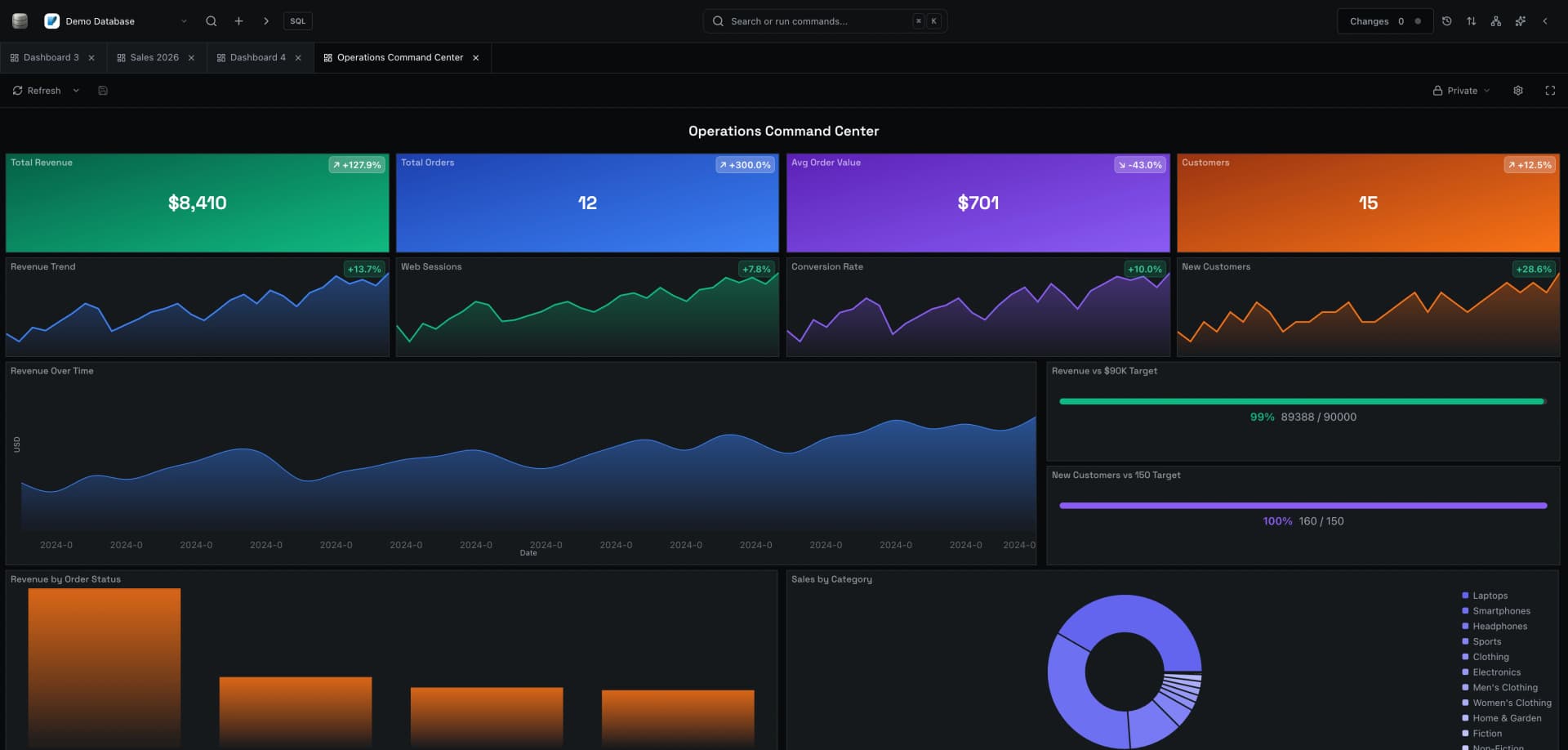
The verdict
Neon is the better choice for developer workflows and variable workloads. RDS is the better choice for conventional production PostgreSQL inside AWS.
A mixed model can work: Neon for preview and development databases, RDS for production. It also creates two sets of extensions, networking, roles, migrations, and operating procedures. Use it only when the development benefit covers that extra ownership.
Compare other options in our Neon alternatives guide, or use DB Pro's Neon client to work with your database from the desktop.
Keep Reading
Neon vs CockroachDB: PostgreSQL or Distributed SQL?
Compare Neon vs CockroachDB for PostgreSQL compatibility, horizontal scaling, multi-region data, transactions, branching, operations, and cost for your app.
Neon vs Aurora Serverless: PostgreSQL Compared
Compare Neon vs Aurora Serverless v2 for PostgreSQL compatibility, scaling, auto-pause, branching, availability, AWS integration, and database cost in 2026.
Best Neon Alternatives for PostgreSQL in 2026
Compare the best Neon alternatives for serverless PostgreSQL, branching, AWS hosting, backend services, enterprise support, and multi-region databases.